Category: St. Petersburg

Information about St. Petersburg for tourists.

  • St. Petersburg – information for tourists

    St. Petersburg – information for tourists

    Saint Petersburg is one of the world’s most beautiful cities. There are many cities with a longer history in Russia. Many cities have a wide variety of attractions and interesting places. But, nevertheless, Saint Petersburg attracts attention of large number travel enthusiasts. It is no doubt, that main city of Russia, the center of tourism and business life is Moscow. St. Petersburg has its own, unique charm. It is a city which certainly should be visited. You will find a lot of useful information on our website.

    According to statistics, about 9 million tourists visited St. Petersburg in 2023. Tourists are attracted to St. Petersburg by its interesting history (for over 200 years, the city was the capital of Russia), the world-famous sights, museums and theaters.

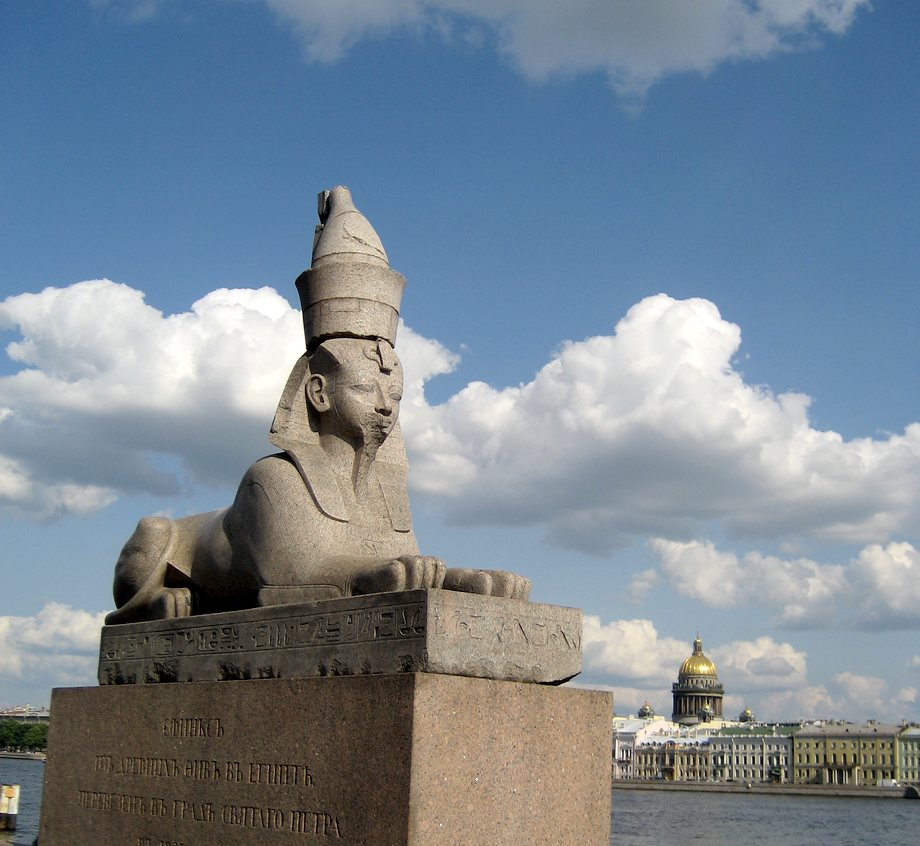
    St. Isaac's Cathedral and the Egyptian Sphinx. Photographed from Vasilievsky Island.
    Pictured: St. Isaac’s Cathedral and the Egyptian Sphinx. Taken from Vasilievsky Island.

    On these pages you will find a lot of interesting and useful for tourists’ information about St. Petersburg. This Saint Petersburg tourist guide offers information about the city’s attractions, the most popular museums, the best theaters of St. Petersburg, interesting for tourists’ places. It may be useful to know while planning a trip in Saint Petersburg.
    You can ask your questions about Saint Petersburg in the relevant section of the website.

    General information

    St. Petersburg is one of the largest cities in Russia. It is the northernmost city in the world with over one million people population. According to statistics, the city is home to over five million people. The city was founded May 27, 1703 by the most famous ruler of Russia, Emperor Peter the Great. Construction of the fortress began in the day on an island on the Neva River. The city was rapidly developed. The first shipyard has become operate in St. Petersburg already in 1705. Saint Petersburg became the capital of Russia in 1712.

    Bodies of state power of Russia have been placed in St. Petersburg for about 200 years. Headquarters of the Emperor of the Russian Empire were located here. Luxurious palaces and beautiful parks was built in the city. Saint Petersburg historic center and associated set of monuments was included in the UNESCO World Heritage List. Tourists will find a lot of interesting places in St. Petersburg for themselves.

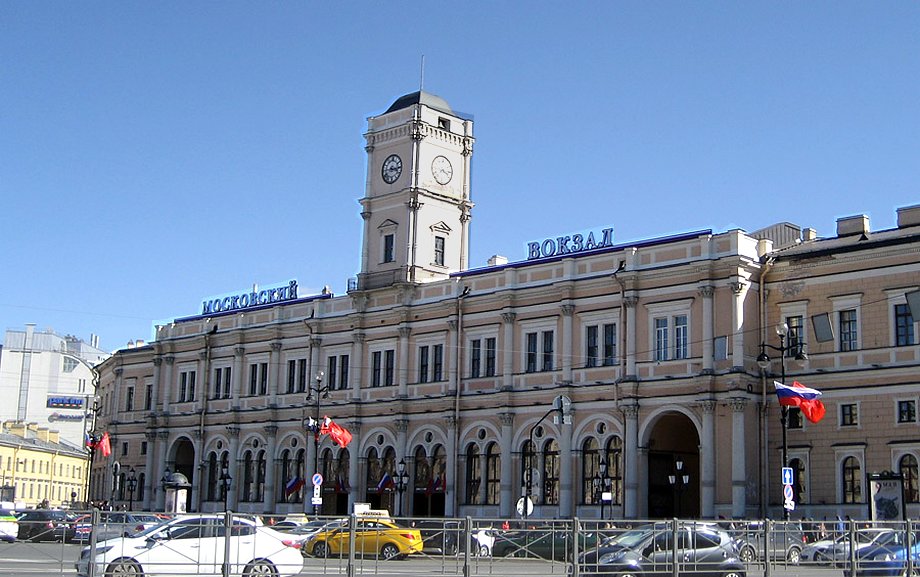
    Nevsky Prospect is the city’s main street. Its length is about 4.5 kilometers. The street runs from the Admiralty and Palace Square to the south-east to the Moscow Station (Vosstaniya Square), and then continues to the Alexander Nevsky Square and Alexander Nevsky Lavra.
    There are six subway stations near the Nevsky Prospekt: Admiralteiskaya, Gostiny Dvor, Nevsky Prospect, Ploshad Vosstaniya, Mayakovskaya, Alexander Nevsky Square.

    June and early July is the time of the White Nights in St. Petersburg. The shortest night and the longest day falls on 20 – 21 June. This is the best time to visit the city. You can walk all nigh these days (if weather permitting) on the streets and quays of the city.

    Peter and Paul Fortress, White Nights, late June, approximately 2:00 AM.
    Pictured: Peter and Paul Fortress, White Nights, late June, approximately 2:00 AM.

    Petersburg, facts and figures

    • Date of the city foundation – 27 May 1703.
    • The number of inhabitants (2026) – 5659 900.
    • Total area – 1399 km².
    • Telephone code – +7 812.
    • Number of bridges – 342.
    • The warmest months – June, July, August.
    • The coldest months – December, January, February.

    Attractions and places to visit

    The city of St. Petersburg has a lot of attractions and interesting places for tourists. Most of them are located in a relatively small area in the central part of the city.

    Information about the most famous tourist sites with reference to the nearest metro stations is located below. You can find lots of information about attractions also on the other pages of the web site.

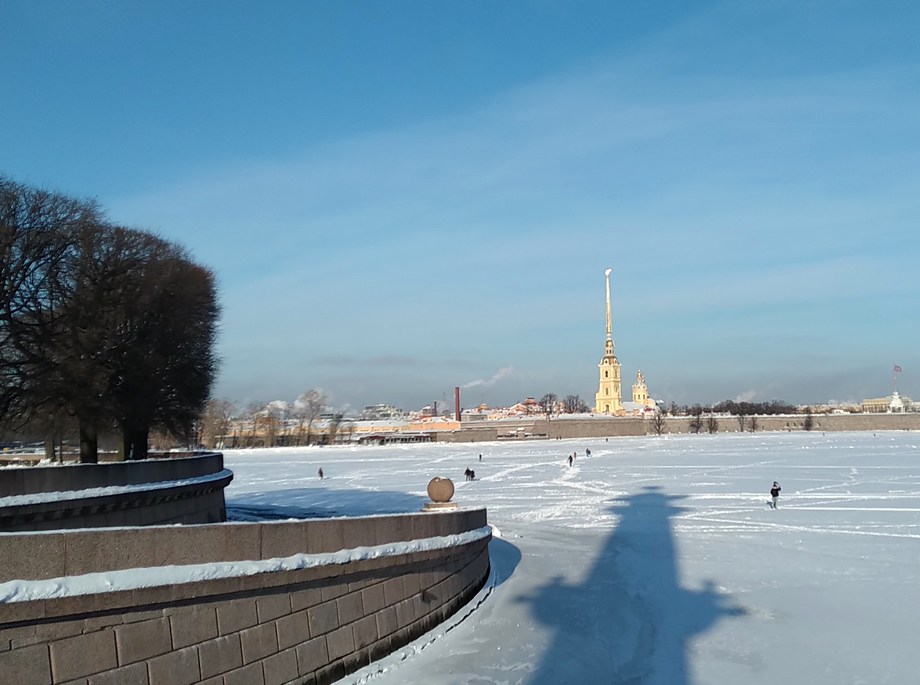
    • “Peter and Paul Fortress.” Peter and Paul Fortress is the historical center of the city. Saint Petersburg construction began with the construction of the fortress. At the moment it is one of the main attractions of the city. Beautiful view of the fortress opens from the waterfront of the Neva River (near the Winter Palace). At the fortress territory operates “Museum of history of St. Petersburg”.
    • “Palace Square.” Palace Square is the main square of St. Petersburg. Near the square are located many attractions. At the Palace Square is the Winter Palace – Russian emperors residence. In the palace is situated the most famous museum in Saint Petersburg – the Hermitage.
    • “The Bronze Horseman.” It is monument to the founder of St. Petersburg – Peter the Great. This is the most famous monument of the most famous tsar of Russia. The monument is located near the banks of the Neva River, near St. Isaac’s Cathedral.
    • “Saint Isaac’s Cathedral.” Saint Isaac’s Cathedral is one of the most famous sights of Saint Petersburg. Its dome is visible from many places in the city. Near the dome of the cathedral is an observation deck for tourists.

    Most famous museums of St. Petersburg

    There are more than 200 museums in St. Petersburg. Less than half of them are state museums. There are also many large and small museums belonging to different departments, businesses, private individuals. On this page is a summary of most famous museums of St. Petersburg.

    View of Palace Square from the Hermitage window.
    Photo: View of Palace Square from the Hermitage window.

    The State Hermitage

    The State Hermitage is the most famous museum in St. Petersburg and one of the best museums in the world. The museum’s collection includes about three million works of art and cultural values. The main exhibitions of the Hermitage are located in the Winter Palace, which is located on Palace Square in St. Petersburg.
    Address: Palace Square 2, St. Petersburg, Russia.
    The nearest metro station: Admiralteyskaya.

    The State Russian Museum

    The Russian Museum has the largest collection of Russian art in the world. The museum is located in the Mikhailovsky Palace, next to “Ploščad Iscusstv” square, close to Nevsky Prospekt. Under the direction of the museum are also: Mikhailovsky Garden, Summer Garden, the Summer Palace of Peter I, House of Peter I. Find out more information about museum.
    Address: “Engenernaya” street 4, Saint Petersburg, Russia.
    Nearest metro stations: “Nevsky Prospekt”, “Gostiny Dvor”.

    Kunstkamera

    “Museum of Anthropology and Ethnography named after Peter the Great” of Russian Academy of Sciences, better known under the name “Kunstkamera”. It is first museum in Russia. Museum was founded by Peter the Great. Year of the museum’s foundation is 1714.
    Address: “Universitetskaya” embankment 3, Vasilievsky Island, St. Petersburg, Russia.
    Nearest metro station is “Vasileostrovskaya”.

    Central Naval Museum

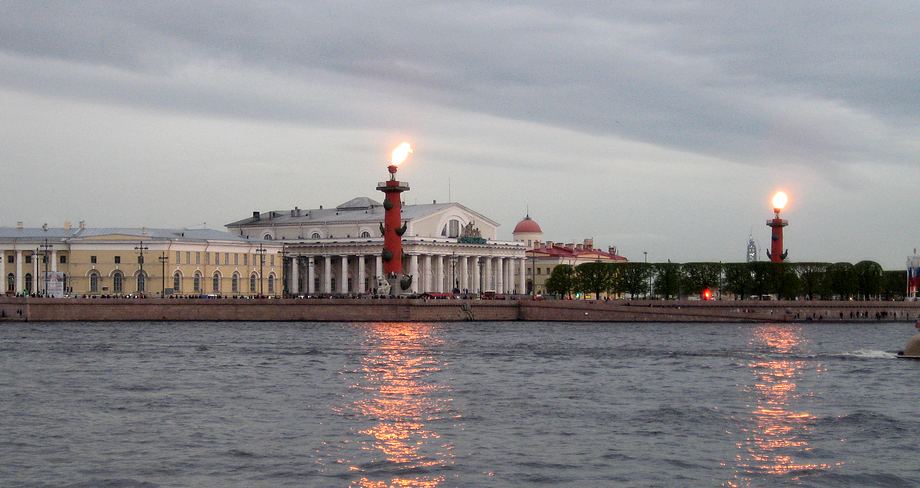
    Central Naval Museum is one of the oldest museums in Russia and one of the largest maritime museums in the world. Branches of the museum are “Cruiser Aurora” and Submarine D-2 “Narodovolets” (located next to the Lenexpo). History of the museum started in 1709. For a long time the main exhibition of the museum was located in the Old Stock Exchange building on the Vasilievsky Island. The museum is moving to a new location.
    Address: “Ploschad Truda” square 5, St. Petersburg.
    The nearest metro stations (Admiralteyskaya, Sadovaya Spasskaya) are located at a distance of about 1,5 kilometers from the museum.

    Museum of Artillery

    Museum of Artillery, military engineering and communication troops is one of the oldest museums of St. Petersburg. Peter I issued orders for old guns preservation in 1703. The museum traces its history from that time. The museum’s collection includes more than 850,000 items. At the entrance to the museum (in the yard) are located more than 200 samples of guns, self-propelled artillery and missile systems.
    Address: Alexandrovsky Park 7, St. Petersburg.
    The nearest metro station is Gorkovskaya.

    Russian Museum of Ethnography

    Russian Ethnographic Museum is one of the largest ethnographic museums in Europe. The museum was founded in 1902 as a department of the Russian Museum. The museum has a department of ethnography of Russian nation, departments of ethnography of Belarus, Ukraine, Moldova, the people of the North-West of Russia, the Baltic countries and the peoples of the Caucasus, and other departments. The museum is located next to the Russian Museum.
    Address: St. Petersburg, Engineering street 4/1.
    The nearest metro stations: “Nevsky Prospekt”, “Gostiny Dvor”.

    Museum of the History of St. Petersburg

    The State Museum of History of St. Petersburg presents the history, culture and daily life of Saint Petersburg. The main museum exposition located on the territory of the Peter and Paul Fortress. Branches of the museum are also: “Oreshek” fortress in Shlisselburg, Rumyantsev Mansion, AA Block apartment museum, SM Kirov museum, St. Petersburg Museum of avant-garde, Defenders of Leningrad monument.
    The nearest metro station is Gorkovskaya.

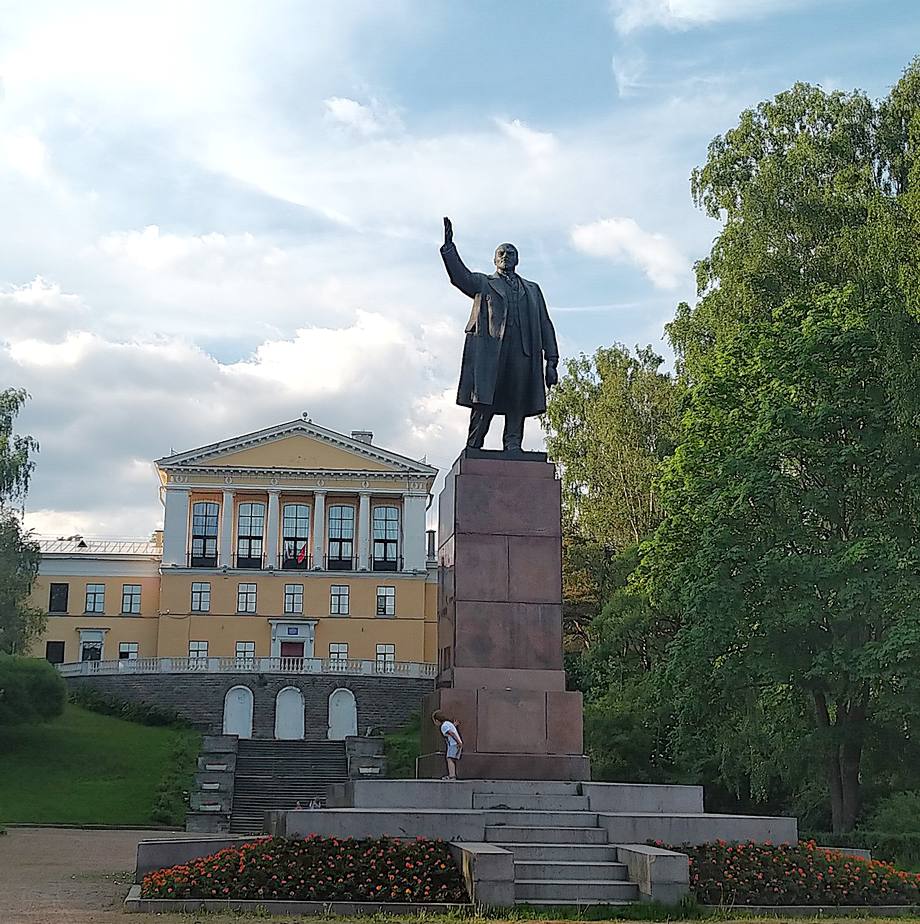
    Lenin monument
    Photo: Lenin monument on Moskovskaya Square in St. Petersburg.

    Public transportation in St. Petersburg

    St. Petersburg is a big city. The distance from the shopping center Mega-Parnas in the northern part of the city to the located south of the city airport Pulkovo is about 33 kilometers. The longest street in Saint Petersburg is Sofiyskaya. It has a length of 18.5 km. It is difficult to manage without public transport in such a big city.

    The most convenient mode of transportation in St. Petersburg is metro (subway). Metro carries the largest number of passengers. There are 5 lines and over 60 stations in Saint Petersburg metro. Subway stations are available at the most important places of the city.

    Subway stations are not available in all parts of the city. Very often to get to the right place you have to use the bus. There are two group buses in St. Petersburg: social (municipal) bus routes and so-called commercial routes (mini buses). The fare on commercial buses is slightly higher. Commercial buses have a shorter time interval between buses and it stop anywhere (where allowed) at the request of the passenger.
    Trolleybus and tram are a good complement to the network of bus routes. The fare on the trolley bus and tram equals the cost of the social (municipal) buses.

    How to pay for a trip? For travel on the subway need to buy a single trip ticket (the metal “Zeton”) or electronic multiple ticket (contactless refillable card for multiple travel for long periods). There are many different types of long-term tickets (contactless cards) suitable for different types of transport. It can be purchased in the underground cash desks, which are available at each metro station.
    Pay the fare on the bus, tram or trolley is possible also by cash to the bus driver or conductor.

    St. Petersburg’s main airport is the international airport “Pulkovo”. The airport is located just south of the city. Getting to the airport is possible by bus or taxi. More details about the airport “Pulkovo”.

    Most useful for tourists Metro stations

    “Admiralteiskaya” metro station. From this station along “Malaya Morskaya” Street is convenient to get to St. Isaac’s Cathedral. Near are located “Aleksandrovskiy Sad” park and the Senate Square with monument the Bronze Horseman. From the waterfront depart speedboats to Peterhof. The distance from the metro station to the Palace Square is approximately 300 meters.
    Metro station “Gorkovskaya”. This is the nearest station to the “Peter and Paul fortress”. In the fortress, in Peter and Paul Cathedral, is buried founder of the city Peter the Great. Nearby, on the fortress beach, often are organized various events for tourists.
    Near the metro station “Gorkovskaya” are also located: a zoo, a museum of Artillery. The distance to the cruiser Aurora is approximately 1 kilometer.
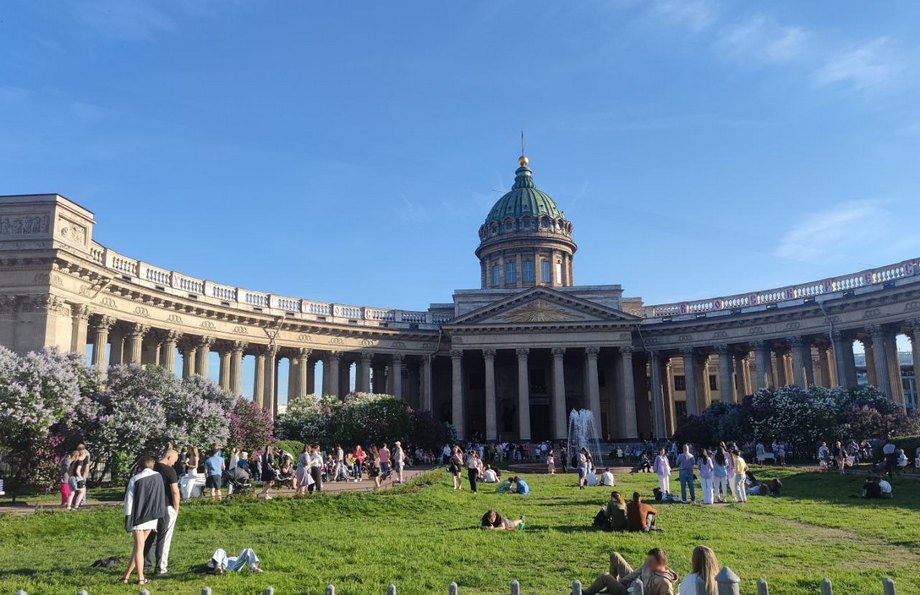
    Metro stations “Nevsky Prospekt” and “Gostiny Dvor”. At the intersection of Nevsky Prospekt and the Griboyedov Canal is the Kazan Cathedral, the Singer House. Slightly south of Nevsky Prospekt across Griboyedov Canal spanned the famous “Bank bridge”.
    North of Nevsky Prospekt are located: Church of the Savior on Spilled Blood, the Russian Museum, Champ de Mars, a park “Summer Garden”.

    It is useful to know

    It is useful to know, being in St. Petersburg, not to be confused in the names.

    As in all cities of Russia there are streets and “prospekts” in St. Petersburg. The exception is Vysilevsky Island. There are houses lines numbers instead of street names on Vysilevsky Island. On one side of the street is one line and on the other side other. For example, the metro station “Vasilyeostrovskaya” is located at the intersection of 6th and 7th lines with “Sredniy” prospekt of Vasilevsky island.

    There are streets with the same name in St. Petersburg. “Bolshoy” and “Maly” prospekts (streets) are available both on Vasilevsky Island, and on the Petrograd Side. As the name indicates, for example: “Bolshoy prospekt” PS (Petrograd Side), or “Maly” prospekt VO (Vasilievsky Island).

    “Aleksandrovsky” Park is located near the metro station “Gorkovskaya” and “Aleksandrovsky Sad” park is located near the Admiralty.

  • Peterhof, park and museum

    Peterhof is one of the most popular, beautiful and attractive places for tourists in the suburbs of St. Petersburg. If you will be in St. Petersburg in the summer, then you definitely need to find time to visit the park with beautiful fountains and Peterhof Palace.

    Peterhof is a small town, suburb of St. Petersburg. It is located on the shores of the Gulf of Finland, at a distance about 30 kilometers south-west of the center of St. Petersburg. The population of the town is about 78,500 people.
    Peterhof got its name from the German word Peterhof – “Peter’s Court”. From 1944 to 1997 the town was called “Petrodvorets”.

    peterhof

    Peterhof was founded in 1710 as the emperor’s country residence. It received the city status in 1762. There were villages Kuusoja and Pohjajoki on the place of Peterhof on the coast of the Gulf of Finland prior to the beginning of the XVIII century. The most famous town landmark is the “Peterhof” museum.

    Sea Channel view of the in Peterhof from the Grand Palace is shown in the picture.

    The Museum Peterhof includes: “Peterhof Grand Palace,” “Upper Garden”, “Lower Park” and other objects.

    The most interesting place for tourists (in summer) in Peterhof is “Lower Park”. Lower Park has an area about 102 hectares. The park stretches from west to east along the coast of the Gulf of Finland by 2.5 kilometers. Its width from north to south is about 500 meters.

    The main decorations of the park are its fountains. “Grand Cascade” fountain is situated in the central part of the park, in front of Grand Palace. “Sea Canal” is laid from the Grand Cascade to the coast. The canal divides the park into two parts. “Adam” and “Eve” fountains, “Chess Mountain” and “Gold Mountain” fountains cascades, Monplaisir Palace and Hermitage Pavilion are located at the equal distance from the canal on both sides of the park. “Oak” and “Umbrella” fountains are children’s favorites. The most famous fountain in the park is “Samson tearing the lion’s mouth” named fountain.

    Lower Park of Peterhof

    Operating mode of the Peterhof Lower Park

    • The park is open (summer 2026): 09:00 – 20:00.
    • On Saturdays, the park is open from 9:00 to 21:00.
    • Ticket office opening hours: 09:00 – 19:30.
    • Fountains operate weekdays from 10:00 to 18:00 on weekends and public holidays from 10:00 to 19:00.
    • Launch of the Grand Cascade fountains: 11:00.
    • Entrance fee to the Lower Park: 1100/900 rubles (for citizens of Russia and Belarus). There are exemptions for certain categories of citizens. Prices for the summer season 2026. The cost of the full ticket for foreigners is 2500/2100 rubles.

    How to get there
    You can get to Peterhof:
    By bus (get off at the “Fountains” stop)
    From the Avtovo metro station, take buses #200, #210, #204E, and #343E.
    From the Leninsky Prospekt metro station, take buses #103 and #343E.
    From the Prospekt Veteranov metro station, take buses #103 and #343E.
    From the Yugo-Zapadnaya metro station, take bus #201.

    By sea transport from the pier at 18 Palace Embankment, near the Winter Palace. In Peterhof, the pier is located in the Lower Park, near the Sea Canal. A trip to Peterhof on the Meteor is probably the best option, although not the cheapest.

    By electric train from the Baltic Station, then by bus: No. 352, No. 356, No. 463, No. 489/

Мы не регистрируем новых пользователей, не собираем персональные данные. Наш сайт и партнёры, такие как яндекс-метрика, рекламная сеть Яндекса и другие могут использовать cookie-файлы для наилучшего представления вам информации. Продолжая использовать этот сайт, вы соглашаетесь с использованием cookie-файлов.
Принять