The United States was the only major country to experience a decline in international tourism last year. The World Cup was expected to attract many tourists this year, but something went wrong. It turns out that a number of cities are actually experiencing a decline. Perhaps the situation will improve closer to the knockout stages?
The tournament was expected to help overcome the post-pandemic decline in international tourism to the United States. FIFA’s initial forecasts assumed 40% of tournament attendees would be international tourists, but it appears the number of international tourists is slightly lower than expected.
Several factors have converged: the international situation, significant visa delays, and exorbitant hotel prices.
It’s worth noting that the situation is quite uneven across cities. For example, in major cities like New York and Miami, the number of hotel bookings on matchdays is lower than during the same period last year. However, in Kansas City (for example), there has been a real surge in tourism. All hotel rooms were either fully booked or 80-85 percent occupied. Short-term rental revenue doubled.
We can’t assess the situation objectively. A closer look reveals a clearer picture. Greedily hoping for windfall profits, some hotels in major cities initially jacked up room rates by as much as 500%. The United States is already quite an expensive destination for travelers from many countries, and such high prices made trips to the matches unaffordable for many. Yes, hotels were forced to lower prices, but it was too late. Business travelers didn’t travel during these days, and football fans didn’t either. Something similar happened in New York.
As for Kansas City’s success, there’s speculation that Lionel Messi was responsible for the “game” (hotel occupancy). The city hosted the match between Argentina and Algeria, and South American fans of Lionel Messi and the Argentina national team filled the hotels. (The role of personality in history and business?)
Let’s not look for failures in this truly great celebration for millions of football fans around the world. We couldn’t come either, but we’re enjoying watching the matches on TV immensely.
The most exciting days of the World Cup are still ahead! It’s believed that in all the host cities, this summer will still be better for hotels and restaurateurs than last year.
Russian citizens submitted over 679,000 Schengen visa applications in 2025. This is a 12% increase compared to the previous year. 618,800 applications were approved. Applicants were denied visas in nearly 43,000 cases. According to statistics, the Schengen visa refusal rate for Russians is decreasing annually: 10.6% in 2023, 7.5% in 2024, and 6.3% in 2025.
Applicants pay a consular fee before submitting their application. If their application is refused, this money is wasted. It is estimated that rejected Russians will lose over €3.3 million in 2025.
Applicants pay not only the consular fee but also the visa application center service fee. It is impossible to estimate these losses.
Italy issued the most visas to Russians, approving over 161,000 applications. France ranks second with 156,500 visas. Spain issued over 123,300 visas to Russians. Greece ranks fourth in Schengen visa issuance to Russian citizens.
Schengen countries primarily issue single-entry visas to Russians. Multiple-entry visas are issued less frequently than before.
I was born in the USSR. Traveling to other countries was impossible for the vast majority of people at the time. No one could have imagined that everything would change, but it did. I received a two-year multiple-entry visa and traveled without restrictions. I visited Finland most often. But history has come full circle, and obtaining a Schengen visa has become impossible again.
However, Russians still have many opportunities for international travel. Turkey, Egypt, Thailand, and Vietnam are among the most popular countries.
Chinese tourists are quite common on the streets of central St. Petersburg. We’d love to know what interests Chinese tourists in St. Petersburg, but there’s a problem: none of the administrators on this website speak Chinese. So, we asked AI for advice. Here’s what it told us (with our corrections).
Judging by comments on social media and forums, Chinese tourists in St. Petersburg have created their own “must-visit” list. It seems Chinese tourists are most interested in “Imperial St. Petersburg,” its beautiful palaces and sites. Chinese tourists are also interested in where to eat authentic Chinese food in St. Petersburg.
Here are the top places Chinese travelers recommend to each other:
Imperial palaces and parks. These are a must-see in St. Petersburg. They are the city’s calling card, without which no trip is complete.
The Catherine Palace in Pushkin. The main attraction here is the famous Amber Room. Be prepared for lines at the entrance to the palace.
Peterhof. The Grand Cascade of Fountains makes a lasting impression on all tourists – the abundance of gold and flowing water is always beautiful. Strolling along the park’s shady alleys also sets the mood. The park offers many spots for beautiful photographs.
Pavlovsk Palace and Pavlovsk Park. This place is recommended for a relaxing stroll.
Tsarskoye Selo Lyceum. It’s hard to believe, but AI believes this place is very popular with Chinese tourists due to its connection with the poet Alexander Pushkin, who is supposedly well known in China (his name sounds like “Pu Xijin”).
Rivers and Canals. A boat ride along the rivers and canals is a must. It’s recommended to do this both during the day and in the evening – the experience will be completely different. A reminder: the White Nights season in St. Petersburg runs from approximately late May to mid-July.
Russian Museum. Unlike the Hermitage, which can be too large, Chinese visitors recommend the Russian Museum for experiencing authentic Russian art, especially for older visitors. (In my personal opinion, the Russian Museum is much more interesting than the Hermitage for those interested in painting.)
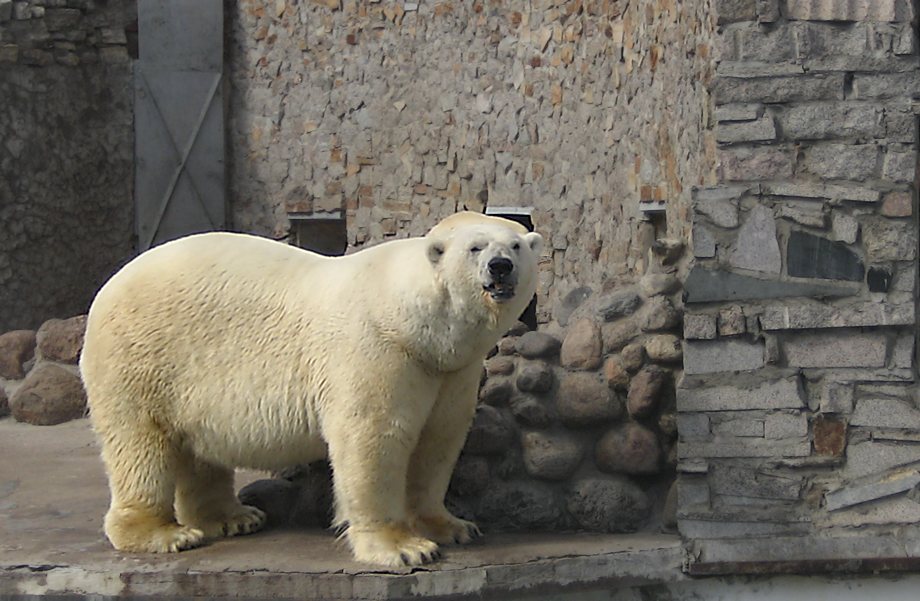
The Arctic and Antarctic Museum. This is truly unexpected, but on Chinese social media (for example, on WeChat), this place is being discussed as very unusual and memorable. Maybe you have enough time to fly to northern Russia? Teriberka, the Solovetsky Islands. There’s also the opportunity to take an icebreaker trip from Murmansk to the North Pole. (If you’re lucky, you can see the Northern Lights in winter.)
“Chinese Petersburg”: Where to eat and spend your free time. There are places in St. Petersburg where Chinese tourists can feel at home and eat familiar food. We don’t have the information and can’t offer advice. The AI suggests visiting Chinatown at 174 Ligovsky Prospekt.

Hot weather has settled in many European cities. It’s hot not only during the day but also at night. Even at night, there’s no relief. The temperature in your home is oppressive unless you have air conditioning.
It’s not only uncomfortable, but also dangerous to your health. Many people find hot weather difficult to bear. But you can escape the heat by going to another country!
In Finland, Sweden, and Norway, unbearably hot weather is very rare. You’ll feel chilly rather than hot. But escaping the cold is easy—just dress warmly. Overheating is more difficult.
Temperature today: Helsinki – +18°C. Turku – +19°C. Stockholm – +19°C.
I’m planning to visit the Solovetsky Islands in mid-June. (The Solovetsky Islands are located in the White Sea.) The air temperature today is around +5°C. I hope it will warm up a bit soon.
Perhaps global warming will force “digital nomads” to move to northern European countries for the summer, where it’s more comfortable to live and work.
An unexpected and unpleasant incident, a gross violation of museum rules, occurred on the afternoon of May 17, 2026, at the Hermitage Museum in St. Petersburg. A man entered the Hermitage’s Great Throne Room, stepped over the rope barrier, and sat on the throne of the Emperor of the Russian Empire.
Sitting on the throne, he read out his address. The address had been prepared in advance and printed on paper.
When a museum employee attempted to call the offender to order, he pulled out a knife. Rosgvardia and museum security officers arrived and detained the offender. It is reported that the man attempted to resist during his arrest.
Who is this troublemaker, and what did he want to say? According to preliminary information, the strange offender is a businessman from the Leningrad Region. It appears that his business is not doing well, and this likely prompted him to act this way. He probably wanted to be heard.
Photo: The Emperor’s throne in the Hermitage Museum.
A similar incident occurred at the Hermitage in March 2025. A museum visitor sat on the throne of the Grand Master of the Order of Malta. The court ordered the visitor to pay over 800,000 rubles in damages to the museum.
Friends! Let’s treat the museum’s exhibits and everything around us with care.
Visiting museums is on the agenda for many tourists to St. Petersburg. How much does it cost? To help you budget your trip to St. Petersburg, we’ve prepared an overview of entrance ticket prices for the city’s most popular cultural attractions. (Prices were reviewed in the spring and are subject to change. Check for availability of online queues and discounts.)
Important: For many museums (especially the Hermitage, the Russian Museum, and Peterhof), it’s best to purchase tickets online 2-3 weeks in advance to avoid queues at the box office.
Changes and inaccuracies are subject to change. Please check the museum’s official website for details.
Hermitage
Entrance tickets for the main category: Main Museum Complex – 700 rubles, General Staff Building – 700 rubles. (Open-dated admission – 1,200 rubles.)
What’s famous: The Hermitage is one of the most famous museums in the world. To explore all 365 halls, you’d need several years. We recommend finding and seeing: suits of knightly armor, the Peacock Clock, and paintings by Da Vinci and Rembrandt.
Address: Palace Embankment, 34 (Palace Square). Metro: Admiralteyskaya. About the museum.
Peterhof Museum (Lower Park and Fountains)
Entrance fees to Peterhof’s Lower Park for adults are 900 rubles on weekdays and 1,100 rubles on weekends and holidays (during fountain season. Admission is usually free in winter). Foreigners pay more. Discounts are available—details here.
Famous for: Known as the Capital of Fountains, the Lower Park is truly beautiful and one-of-a-kind. The main attractions are the magnificent Grand Cascade and the Samson Fountain.
Address: Peterhof, 2 Razvodnaya Street.
Directions: Alternatively, take a bus from Avtovo Metro Station or a high-speed boat from central St. Petersburg.
Kunstkamera Museum
Adult admission: 500 rubles (schoolchildren and pensioners: 300 rubles).
Famous for: Russia’s first museum (founded by Peter the Great). Renowned for its collection of anatomical rarities and a unique globe-planetarium.
Address: 3 Universitetskaya Embankment (Vasilyevsky Island, near Palace Bridge.)
Metro: Vasileostrovskaya or Admiralteyskaya.
State Russian Museum (Mikhailovsky Palace and Benois Wing)
Adult admission: 500–700 rubles (may vary).
Famous for: The largest collection of Russian art. Very interesting exhibitions for those ready to experience art.
Address: 4 Inzhenernaya Street (City Center, near Nevsky Prospekt and the Griboyedov Canal.)
Famous for: Works by the jeweler who supplied jewelry to the imperial family. Fabergé Easter eggs. The palace interiors and jewelry of the highest caliber.
Address: 21 Fontanka River Embankment (near Anichkov Bridge).
Metro: Nevsky Prospekt, Gostiny Dvor.
St. Isaac’s Cathedral
Adult admission to the cathedral: 450/600 rubles (daytime/evening). A visit to the observation deck of the colonnade of St. Isaac’s Cathedral — 500 rubles.
Famous for: The 4th largest domed cathedral in the world. A very beautiful building, one of the visual symbols of St. Petersburg. The observation deck (colonnade), at a height of 43 meters, offers the best panorama of the city center. Concerts are sometimes held in the cathedral.
Address: 4 St. Isaac’s Square.
Metro: Admiralteyskaya.
Erarta Museum of Contemporary Art
Basic single-visit ticket: 1,500 ₽.
What it’s famous for: The largest private museum of contemporary art in Russia. There are no boring classical halls here—only paintings, installations, video art, and sculptures by contemporary artists. If classical art is not understood by many, then perhaps even fewer understand contemporary art.
Address: 29th Line of Vasilievsky Island, Vasileostrovskaya.
Grand Maket Rossiya
This isn’t a museum, but it’s still very interesting. It’s fun for both children and adults.
Price per adult: 980 ₽.
What it’s famous for: The largest model of the largest country in the world (800 square meters). There’s a lot of mechanization: trains are running, windmills are spinning, lights are coming on in the windows of houses, day and night alternate. You can find Kaliningrad, Kamchatka, and even a little cosmonaut.
Address: 16 Tsvetochnaya St. (entrance from Predtechenskaya St.). It’s located in the southern part of the city, quite far from the center.
Metro: Moskovskie Vorota.
Cruiser Aurora
Adult admission: 600 rubles.
Famous for: The legendary ship that gave the signal for the storming of the Winter Palace in 1917. See what the warship looked like inside: cabins, engine room, guns, and historical exhibits. You can stand on the embankment and take photos from the outside for free.
Address: 2-4 Petrogradskaya Nab.
Metro: Gorkovskaya (15-minute walk through Alexandrovsky Park).
*Prices may have changed slightly. Please check the museums’ official websites for current prices before your visit.
The Peterhof Museum website has published entrance ticket prices for the Lower Park (fountain park) for the 2026 summer season. Prices for foreigners and Russian citizens are different.
A ticket for most visitors costs 900 rubles on weekdays or 1,100 rubles on weekends and holidays. This price applies to adult citizens of the Russian Federation and EAEU countries (Armenia, Belarus, Kazakhstan, and Kyrgyzstan).
There are discounts for many categories of visitors. For example: Students aged 14 to 18 — 600 rubles. Schoolchildren aged 7 to 14 — 150 rubles.
Full entrance price (for foreigners) is 2,500/2,000 rubles (weekdays/weekends).
There are also free admission days (opportunities to save).
Second Sunday of each month: Children under 18 (Russian Federation and Belarusian citizens only). Students studying at Russian educational institutions.
The second Thursday of every month during the summer season (Lower Park, Alexandria Park, and Oranienbaum Park) is for seniors (Russian and Belarusian citizens only).
Several parks are managed by the Peterhof Museum. The Lower Park is the most famous of them. Peterhof’s famous fountains are located in the Lower Park.
Some changes are possible. We may have made some inaccuracies in the reprint. Please check all details before visiting on the museum’s official website.
The 2026 summer season begins at Peterhof on April 25th. Until then, admission to the Lower Park remains free.
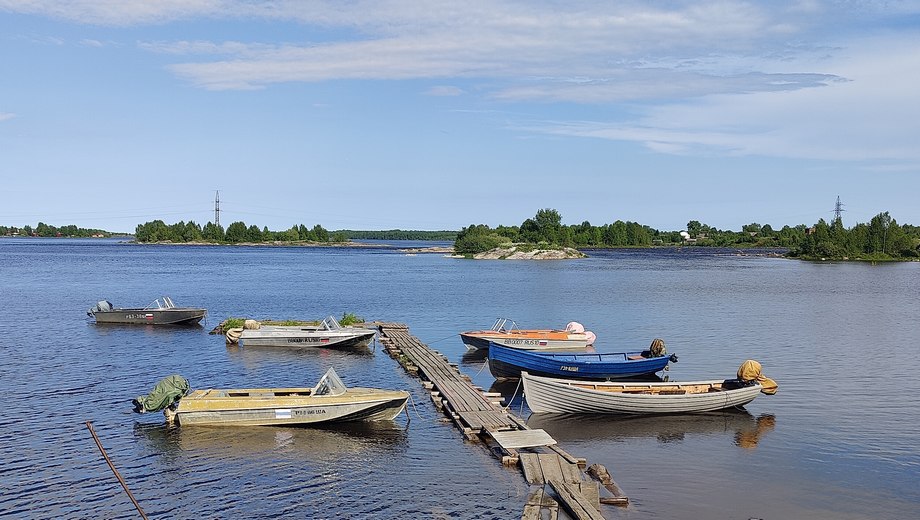
River and canal boat tours have once again become available for tourists in St. Petersburg. These excursions are not offered in winter because the Neva River is covered in ice. River tours usually resume in mid-April, when the river is completely free of ice. (This applies not only to the Neva River, but also to Lake Ladoga.)
Tourists should definitely take a boat tour along the Neva and other rivers and canals of St. Petersburg. The city looks completely different from the water. You can also take a boat to Peterhof and Kronstadt.
Where to book a river tour in St. Petersburg? It’s not a problem. River and boat tours are sold directly at the piers. There are many piers. Docks for pleasure boats are located wherever there are many tourists.
You cross the Fontanka River, the Griboyedov Canal, and the Moika River as you walk along Nevsky Prospekt from Moskovsky Station to Palace Square. You’ll see docks for pleasure boats everywhere, and you can buy boat tickets everywhere.
There are docks for tourist boats on the Neva River near the Palace Bridge and in other places. We wish you a pleasant journey.
Is it worth taking a boat tour if the weather is rainy and windy? You’ll have to decide for yourself.
Thailand is proposing a change in attitude toward tourists: they want tourists who bring more money into the economy, who fly in, spend, and fly home.
This is very reasonable and understandable. Tourists are needed only to extract money from them. If a tourist doesn’t send money, no one needs them. It would be even better if the “tourist” sent money and stayed home.
They are proposing an entry fee for foreigners, a reduction in the visa-free stay period, and other innovations.
Measures are needed to attract tourists willing to spend more money on vacation and to weed out low-quality (poor or budget-conscious) tourists.
In any country, there are entrepreneurs who cater to tourists with limited income. They could suffer. But tourists with money might feel more comfortable.
Quite a few tourists from China are visiting Moscow. This is facilitated by the abolition of visa requirements for both Chinese citizens visiting Russia and Russian citizens visiting China.
Tourism experts have noted some changes in the composition of Chinese tourists in recent years. Previously, Chinese tourists preferred to travel in groups. But recently, more and more Chinese citizens are organizing their trips to Moscow independently.
In fact, the behavior of tourists from different countries has evolved similarly. Traveling in a group is convenient. It’s very good when a travel specialist organizes your trip. Being in a group also provides a certain sense of security.
After gaining experience, amateurs begin to organize their trips independently. This seems more interesting for active people, as they can choose their own route, dates, duration, and itinerary. Concerns about safety also disappear. Most cities in the world are quite safe if you act prudently.
I followed a similar path. My first trips abroad were in a group. Now my wife and I prefer to travel independently. We’ve visited quite a few countries and cities and never had any problems. We’ve also been to Moscow several times.
Where to start preparing for your trip? The most important thing is to have a desire to travel, and you already have that.
Next, you need to decide on your travel dates. In my opinion, the best time to visit Moscow is the summer months, from May to September. Moscow has the most comfortable weather during this time. However, if you want to avoid the crowds, you should choose May or September.
Moscow is also usually beautifully decorated for the New Year holidays. This is the second half of December and early January. It’s impossible to see Moscow like this at any other time of year.
The next step is buying plane tickets. Direct flights to Moscow are available from several cities in China (Beijing, Shanghai, Guangzhou).
The flight from Beijing to Moscow takes approximately 8 hours. Ticket prices depend on the airline you choose.
Where to buy plane tickets? You probably know a good online flight search service. You can also book a hotel there. (Tourists are often offered a discount on accommodation when purchasing airline tickets.)
Where and in what area of Moscow should I book a hotel? It’s best to book a hotel in the city center, near Red Square. However, we often stayed in hotels a little further from the center. It’s important to have a metro station close to the hotel. Public transportation is good in Moscow.
What to do next? We will update the recommendations on our website.
Мы не регистрируем новых пользователей, не собираем персональные данные. Наш сайт и партнёры, такие как яндекс-метрика, рекламная сеть Яндекса и другие могут использовать cookie-файлы для наилучшего представления вам информации. Продолжая использовать этот сайт, вы соглашаетесь с использованием cookie-файлов.