The most famous monument to Peter the Great is located on Senate Square in St. Petersburg. It is known to virtually all Russians as the “Bronze Horseman.” The monument is located on the Neva embankment, near St. Isaac’s Cathedral, between the cathedral and the Neva.
The Bronze Horseman is one of the city’s symbols and one of its main attractions. It is a popular spot among both locals and visitors. It is a must-see for tourists visiting the city, a popular film location, and a popular destination for newlyweds.
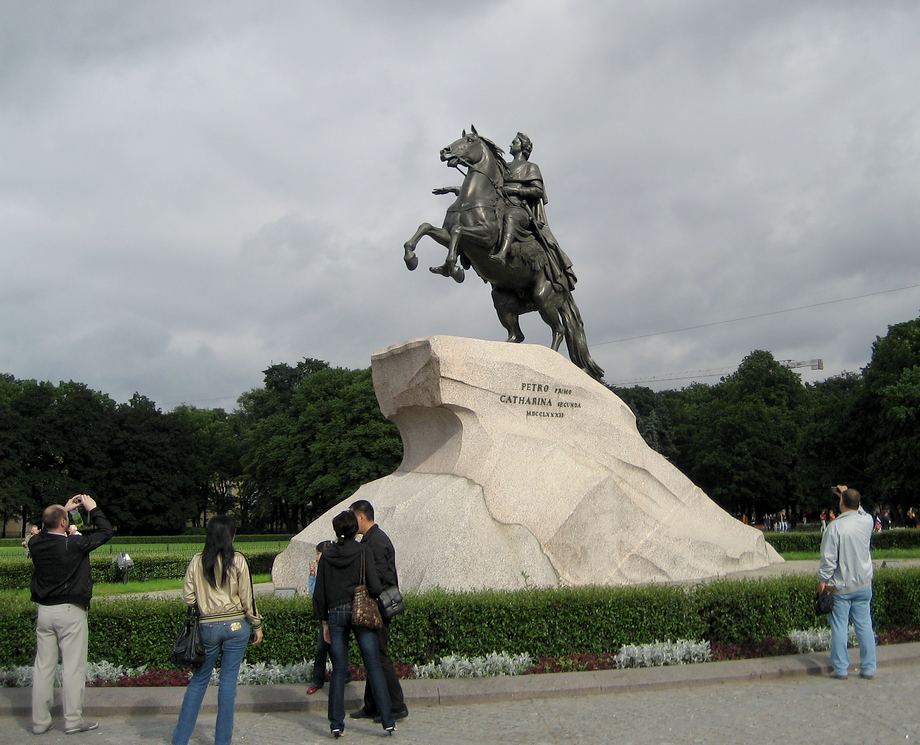
Peter the Great sits on a rearing horse, gesturing toward Sweden, Russia’s main rival at the time. The sculpture weighs approximately 8 tons, is over 5 meters high, the pedestal is over 6 meters high, and the total height of the monument is approximately 10.5 meters. The monument to Peter the Great was a great success and has become a favorite among city residents. In 1883, A.S. Pushkin titled one of his poems (the plot was related to the monument) “The Bronze Horseman.” This is the most common name for the monument today. The monument is easily accessible from St. Isaac’s Cathedral or the Winter Palace. It is approximately 700 meters from Palace Square.
Also located near the Bronze Horseman monument in St. Petersburg are: Palace Square, the Admiralty, St. Isaac’s Cathedral, and the For Seasons Hotel.
Check the monument’s location on the St. Petersburg tourist map.
Admiralteyskaya is the nearest metro station: (approximately 700 meters). Exit the metro station, turn left, walk to St. Isaac’s Cathedral, and turn right, past St. Isaac’s Cathedral. Walk to the riverbank.
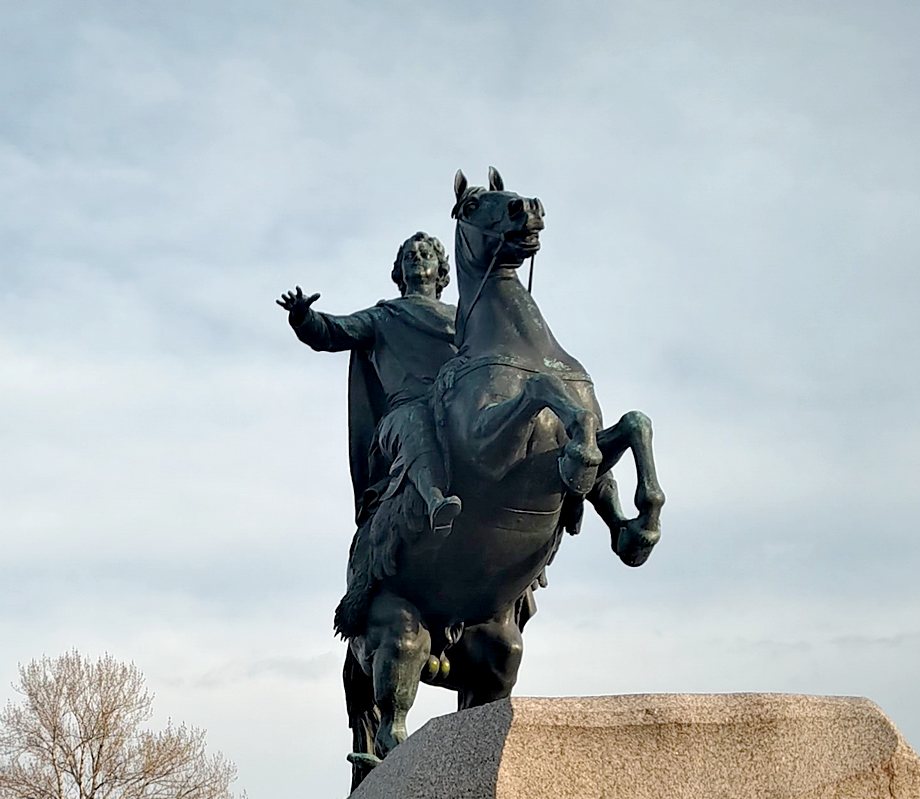
Pictured: The equestrian sculpture is the most famous monument in St. Petersburg.
The equestrian statue of Peter was created by sculptor Étienne Falconet. The contract with the sculptor was signed in 1766. Various designs for the monument were proposed, but the sculptor created the monument according to his own design. The preparation of the life-size plaster model of the monument took twelve years and was completed in 1769. The casting of the statue was completed in 1778. The granite stone for the pedestal was found near St. Petersburg and delivered to Senate Square. The monument was ceremoniously unveiled on August 7, 1782. It was the first equestrian monument to a Russian tsar.